
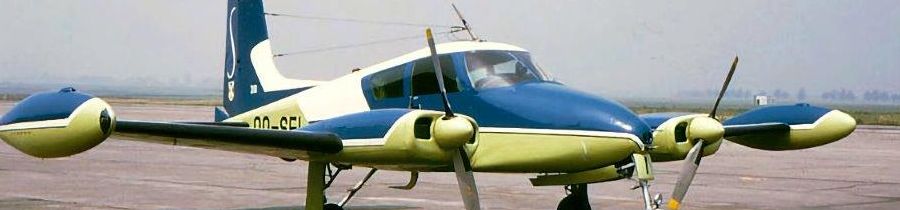
Cessna 310B OO-SEI
The Cessna Model 310 is a five-seat light twin-engine aircraft. It was the first Cessna to feature retractable tricycle landing gear and the first of the company’s designs to be tested in a wind tunnel. Production ran from 1954 to 1980, with 6 321 aircraft built across all variants. The 310B version was produced in 1958 only.
BAPA
A notable feature of the early 310s was the tip-tank fuel system. All fuel was carried in the wingtip tanks, which designers believed would improve safety by keeping fuel away from the cabin. This system did cause some handling quirks and reduced cruising speed by about 16 km/h.
From 1958 until 1980, the École d’aviation civile (EAC) used this model for advanced training of future Sabena airline pilots.
Cessna 310B OO-SEI history
- Construction number 65636, US registration N5436A.
- US export certificate of airworthiness issued on 24/2/1958.
- Delivered on 1/3/1958.
- Registered OO-SEI on 10/3/1958 for SABENA. Certificate of airworthiness n°1180.
- Used for training flights, charter flights, and navigation training at the Civil Aviation School. The C310B replaced the Saab Safir in this role and are based at Grimbergen.
- In July 1961 the aircraft was used in a promotional campaign for the newspaper "La Dernière Heure". It is used occasionally for first flights.
- The C310B's are withdrawn from service in the early 1980's, they are stored outside in Zaventem to be sold
- The certificate of airworthiness of OO-SEI expired on 7/7/1981 and is not renewed.
- The OO-SEI is struck off the Belgian register on 27/1/1988.
- recovered by the Sabena Old Timers who want to use it as a support aircraft for their Westland Lysander during airshows.
- During the restoration, it is sold in March 1995 to the VLOC technical school of Oostende.
- The school received newer training equipment, the OO-SEI is then stored outdoor in September 2018.
- Donated in August 2020 to BAPA and brought back to the association's premises on 21/1/2021
Characteristics
Length: 8 m (8.23 m including the extended nose wheel
Wingspan 10.89 m
Height 3.25 m
Empty weight 1293 kg
Maximum takeoff weight 2132 kg
Engines: 2 Continental Motors O-470-M rated at 240 hp
Maximum 322 km/h
Maximum 399 kilometers per hour
Service ceiling 6,096 meters
Range 1609 kilometers
BAPA
A notable feature of the early 310s was the tip-tank fuel system. All fuel was carried in the wingtip tanks, which designers believed would improve safety by keeping fuel away from the cabin. This system did cause some handling quirks and reduced cruising speed by about 16 km/h.
From 1958 until 1980, the École d’aviation civile (EAC) used this model for advanced training of future Sabena airline pilots.
Cessna 310B OO-SEI history
- Construction number 65636, US registration N5436A.
- US export certificate of airworthiness issued on 24/2/1958.
- Delivered on 1/3/1958.
- Registered OO-SEI on 10/3/1958 for SABENA. Certificate of airworthiness n°1180.
- Used for training flights, charter flights, and navigation training at the Civil Aviation School. The C310B replaced the Saab Safir in this role and are based at Grimbergen.
- In July 1961 the aircraft was used in a promotional campaign for the newspaper "La Dernière Heure". It is used occasionally for first flights.
- The C310B's are withdrawn from service in the early 1980's, they are stored outside in Zaventem to be sold
- The certificate of airworthiness of OO-SEI expired on 7/7/1981 and is not renewed.
- The OO-SEI is struck off the Belgian register on 27/1/1988.
- recovered by the Sabena Old Timers who want to use it as a support aircraft for their Westland Lysander during airshows.
- During the restoration, it is sold in March 1995 to the VLOC technical school of Oostende.
- The school received newer training equipment, the OO-SEI is then stored outdoor in September 2018.
- Donated in August 2020 to BAPA and brought back to the association's premises on 21/1/2021
Characteristics
Length: 8 m (8.23 m including the extended nose wheel
Wingspan 10.89 m
Height 3.25 m
Empty weight 1293 kg
Maximum takeoff weight 2132 kg
Engines: 2 Continental Motors O-470-M rated at 240 hp
Maximum 322 km/h
Maximum 399 kilometers per hour
Service ceiling 6,096 meters
Range 1609 kilometers
%201904.jpg)
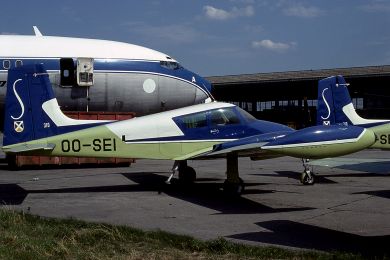
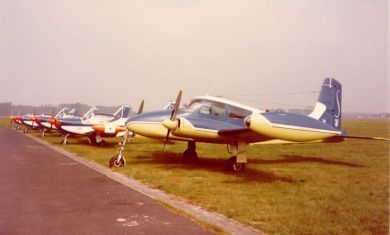
Above: The 310B while usd by the "Ecole d’Aviation Civile", when used to make publicity for "La Dernière Heure" and at the VLOC school in Oostende.
Restoration
When we recovered it from the Ostend technical school, the Cessna 310 had been stripped of a significant portion of its interior equipment.
A grant from the Renard Fund made it possible to acquire the complete cabin interior of a Cessna 310 stored at a scrapyard in France. The removal of the required equipment took two days and was carried out by a team of two volunteers. The carpets, severely damaged by moisture, were reproduced identically by a professional upholsterer. The seats were fully dismantled, derusted, repaired, and restored. All remaining components were carefully refurbished before being reinstalled.
Before reinstalling the interior, an essential step involved recreating the missing central section of the cabin floor. The windows, the rear bulkhead of the baggage compartment, the rudder pedals, interior paneling, and various other components were then reinstalled.
The instrument panel was also restored, completed using instruments from the B.A.P.A. collection, and reinstalled in the aircraft.
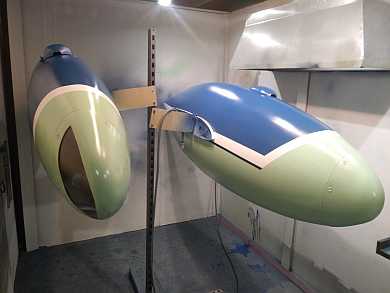
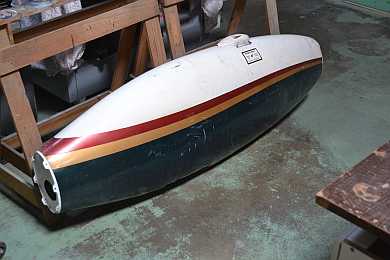
Two major components were still missing: the wingtip fuel tanks (“tip tanks”), characteristic of early-generation Cessna 310 aircraft, which significantly limited the availability of spare parts in Europe. Dianne Baginski, based in Ohio and owner of several early Cessna 310 aircraft, generously donated two fuel tanks and provided invaluable assistance in organizing their complex repatriation from the United States.
Meanwhile, the second surface of the wings was sanded to remove corrosion and improve the overall aerodynamic finish.
When we recovered it from the Ostend technical school, the Cessna 310 had been stripped of a significant portion of its interior equipment.
A grant from the Renard Fund made it possible to acquire the complete cabin interior of a Cessna 310 stored at a scrapyard in France. The removal of the required equipment took two days and was carried out by a team of two volunteers. The carpets, severely damaged by moisture, were reproduced identically by a professional upholsterer. The seats were fully dismantled, derusted, repaired, and restored. All remaining components were carefully refurbished before being reinstalled.
Before reinstalling the interior, an essential step involved recreating the missing central section of the cabin floor. The windows, the rear bulkhead of the baggage compartment, the rudder pedals, interior paneling, and various other components were then reinstalled.
The instrument panel was also restored, completed using instruments from the B.A.P.A. collection, and reinstalled in the aircraft.
Two major components were still missing: the wingtip fuel tanks (“tip tanks”), characteristic of early-generation Cessna 310 aircraft, which significantly limited the availability of spare parts in Europe. Dianne Baginski, based in Ohio and owner of several early Cessna 310 aircraft, generously donated two fuel tanks and provided invaluable assistance in organizing their complex repatriation from the United States.
Meanwhile, the second surface of the wings was sanded to remove corrosion and improve the overall aerodynamic finish.
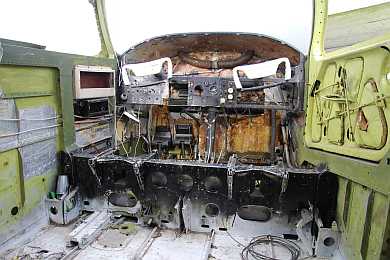
Above: The Cessna 310 had been stripped of a significant portion of its interior equipment.
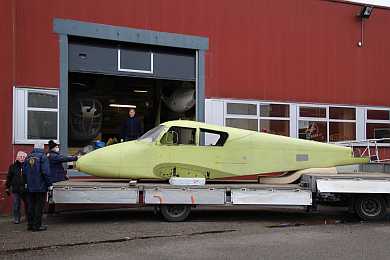
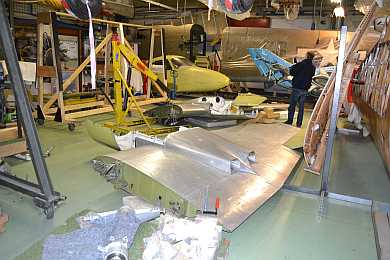
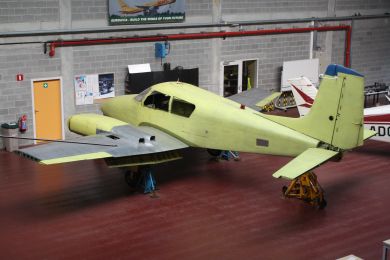
Above: The 310 arrive at BAPA's workshop.
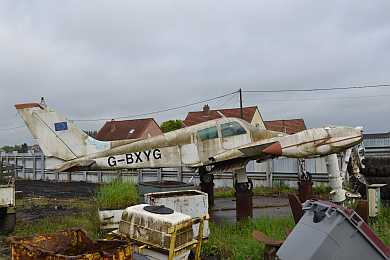
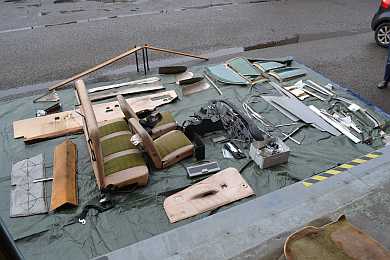
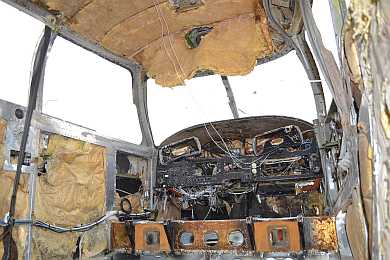
Above right: The 310 of which we bought the complete cabin interior. At right: the parts retieved ready to be refurbished and the cabin of the poor Cessna after being stripped bare.
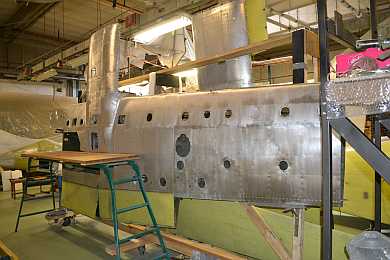
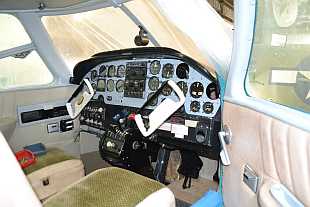
Above: Wing and cockpit restoration in progress — detailed work on the wings and cockpit as the aircraft moves closer to being complete.
Under: one of wing tip tanks given by Dianne Baginski, based in Ohio, and the same tanks after repainting in Sabena livery.
Under: one of wing tip tanks given by Dianne Baginski, based in Ohio, and the same tanks after repainting in Sabena livery.